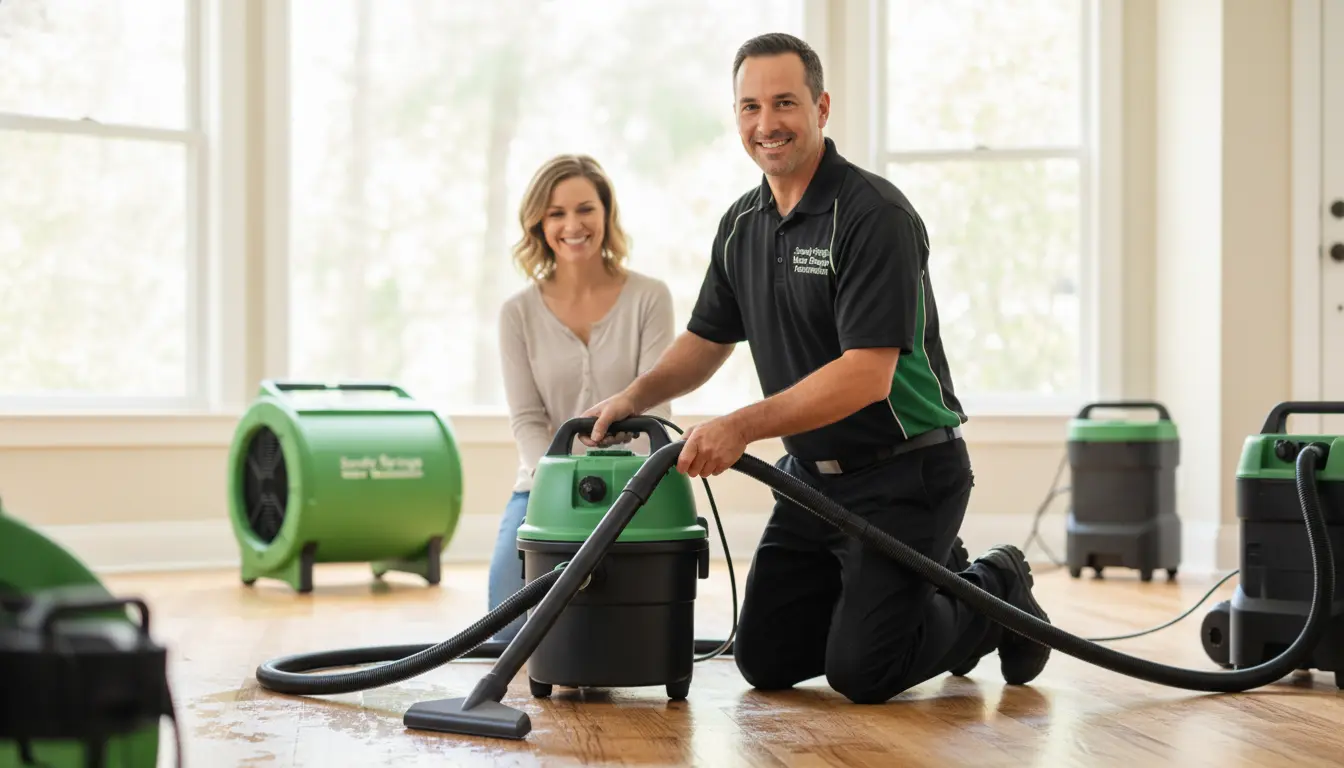
Water damage can strike unexpectedly, turning your safe Sandy Springs home into a soggy nightmare. Whether it’s a burst pipe during a heavy Atlanta-area rainstorm or a leaky roof after one of those sudden Georgia downpours, the aftermath requires swift action to minimize destruction and health risks. As a resident of this vibrant community—known for its beautiful parks like those near the Chattahoochee River and family-friendly neighborhoods—you deserve a reliable guide to navigate this crisis.
At Sandy Springs Water Damage Restoration, we’ve helped countless locals recover from floods and leaks. In this comprehensive step-by-step guide, we’ll walk you through what to do immediately after discovering water damage, how to protect your property, and when to call in professionals. By following these tips, you can reduce long-term damage and get back to enjoying Sandy Springs’ lively events and scenic trails sooner. Let’s dive in and restore your peace of mind.
Immediate Safety Measures: Your First Priority
The moment you spot water pooling in your basement or seeping through walls, safety comes first. Water damage isn’t just about ruined carpets— it can pose serious electrical hazards, especially in older Sandy Springs homes built in the mid-20th century.
Turn Off the Power Source
Before touching anything wet, shut off electricity to the affected area. Flip the main breaker if the damage is widespread. This prevents shocks or fires, which are all too common in waterlogged environments. If you’re unsure, evacuate and call an electrician. In Sandy Springs, where homes often feature basements prone to flooding from the nearby Perimeter area, this step is crucial.
Evacuate if Necessary
If the water level is rising or you smell gas, get out immediately and contact emergency services. Sandy Springs’ proximity to major highways like I-285 means help is quick to arrive, but don’t risk your family’s safety. For basement flood restoration, our team at Sandy Springs Water Damage Restoration is equipped to handle urgent extractions.
Assess the Extent of the Damage
Once safety is secured, take stock of the situation. Document everything with photos and videos for insurance claims—this is key in Georgia, where policies can be picky about covered events.
Identify the Water Source
Is it clean water from a pipe burst, or contaminated from sewers? Gray water from appliances or black water from floods carries bacteria. In Sandy Springs, summer storms often cause emergency water removal needs due to poor drainage in areas like those near the Sandy Springs Library.
Check for Hidden Issues
Look behind furniture and under floors. Water can travel far, leading to mold growth within 24-48 hours. If you’re in a neighborhood like Tuxedo Park, with its lush greenery attracting pests, moisture can exacerbate infestations.
Practical Steps for Water Removal and Drying
Acting fast can save thousands in repairs. Here’s how to start the cleanup process without making things worse.
Remove Standing Water Safely
Use buckets, wet-dry vacuums, or pumps for shallow water. For deeper floods, avoid DIY if it’s more than a few inches—professional water extraction services are essential to avoid spreading contaminants. In Sandy Springs, where clay soil holds water, basements in homes near Chastain Park can flood quickly.
Ventilate and Dehumidify
Open windows and doors if weather permits, and use fans to circulate air. Rent industrial dehumidifiers for larger areas. High humidity in Georgia’s climate means drying takes time; aim for under 50% humidity to prevent warping wood floors common in local mid-century homes.
Protect Belongings
Salvage what you can: elevate furniture on blocks, move valuables to dry areas. For electronics, unplug and let them dry separately. If mold is suspected, especially after prolonged exposure, consider our mold remediation services to ensure your air quality stays safe.
When to Call Professionals in Sandy Springs
DIY works for minor spills, but major damage demands experts. Delaying can lead to structural issues or health problems like respiratory issues from mold.
Signs You Need Immediate Help
If water has reached electrical systems, walls are buckling, or the source is sewage-related, call pros right away. Sandy Springs Water Damage Restoration offers 24/7 emergency response tailored to our community’s needs, from quick fixes in bustling Buckhead-adjacent spots to thorough cleanups in quieter Norcross outskirts.
Why Choose Local Experts?
We know Sandy Springs inside out—from the unique flooding risks near the Dunwoody border to the historic homes in Alpharetta fringes that require specialized care. Our IICRC-certified team uses advanced tools like thermal imaging to detect hidden moisture, ensuring complete restoration.
Preventing Future Water Damage in Your Sandy Springs Home
Recovery is step one; prevention is key to avoiding repeats. Sandy Springs’ variable weather, from intense thunderstorms to occasional hurricanes, makes preparedness vital.
Regular Maintenance Tips
Inspect gutters and downspouts annually—clogged ones cause 40% of basement floods. Seal cracks in foundations, especially on the red clay soil prevalent here. Install sump pumps in low-lying areas like those around the Sandy Springs Performing Arts Center.
Upgrade Your Home’s Defenses
Consider flood barriers for doors and elevated appliances in flood-prone zones. Smart leak detectors can alert you early. For residents in elevated areas like Tuxedo Park, focus on roof maintenance to handle heavy rains.
Insurance and Documentation
Review your policy for water damage coverage. Keep records of maintenance to strengthen claims. In Georgia, HO-3 policies often cover sudden events but not gradual leaks—know the difference.
FAQ: Common Questions About Water Damage in Sandy Springs
How Quickly Should I Act After Water Damage?
Within the first hour for safety, and start removal within 24 hours to prevent mold. Delays can cost 2-3 times more in repairs.
Is DIY Water Cleanup Safe in Sandy Springs Homes?
For small, clean water incidents, yes—but contaminated water requires pros to avoid health risks. Our team handles everything from extraction to drying.
What Are the Health Risks of Untreated Water Damage?
Mold, bacteria, and structural weakening can lead to allergies, infections, or collapses. In humid Sandy Springs, mold thrives fast.
Does Homeowners Insurance Cover Water Damage Here?
Most policies cover sudden floods but not floods from outside sources. Contact your agent and us for seamless claims assistance.
How Long Does Restoration Take in Sandy Springs?
Minor jobs: 3-5 days. Major floods: up to weeks, depending on extent and drying needs. We prioritize speed without cutting corners.
Conclusion: Restore Your Sandy Springs Home Today
Water damage doesn’t have to define your life in Sandy Springs. By following this step-by-step guide—from safety checks and water removal to professional intervention—you can mitigate risks and reclaim your space. Remember, time is your ally against further harm.
Don’t go it alone. Sandy Springs Water Damage Restoration is your trusted partner, serving the area with unmatched expertise. Whether you’re near Chastain Park’s green expanses or the commercial hubs of Buckhead, we’re ready to help. Contact us now for a free assessment and get your home dry and safe again. Call 24/7—your recovery starts here!