Imagine waking up to the sound of dripping water in your Sandy Springs home, only to discover a burst pipe flooding your kitchen. Panic sets in as you realize the potential for mold, structural damage, and costly repairs. As a resident of this vibrant Atlanta suburb, you’re no stranger to sudden Georgia storms or plumbing mishaps that can turn your safe haven into a watery nightmare. But don’t worry—acting swiftly with the right emergency water removal strategies can minimize the damage and restore your peace of mind.
At Sandy Springs Water Damage Restoration, we’ve helped countless locals navigate these crises. In this guide, we’ll share practical, actionable tips tailored for Sandy Springs homeowners. From immediate steps to professional interventions, you’ll learn how to handle water emergencies like a pro. Let’s dive in and keep your home dry.
Understanding Water Damage in Sandy Springs
Sandy Springs’ humid climate and proximity to the Chattahoochee River make it prone to water issues. Heavy rains can overwhelm drainage systems, leading to basement flooding, while aging pipes in older neighborhoods like those near Chastain Park might burst unexpectedly. Water damage isn’t just about wetness—it’s a breeding ground for bacteria and mold if not addressed promptly.
Types of Water Emergencies Common in Our Area
- Storm-Induced Flooding: Torrential downpours, like those during Atlanta’s summer storms, can cause flash floods in low-lying areas such as Riverwood.
- Pipe Bursts: Cold snaps or wear and tear can lead to leaks in homes around Peachtree Corners.
- Appliance Failures: Washing machines or water heaters malfunctioning, common in busy households near Tuxedo Park.
Recognizing the category of water—clean, gray, or black—is crucial. Clean water from a supply line is less hazardous, but gray (from sinks) or black (sewage) requires immediate professional help to avoid health risks.
Immediate Steps for Emergency Water Removal
Time is of the essence. The first 24-48 hours are critical to prevent further damage. Here’s what to do right away:
1. Ensure Safety First
Before touching anything, prioritize safety. Turn off the main water supply to stop the flow—your home’s shut-off valve is usually near the water meter or in the basement. If electricity is at risk, shut off the power at the breaker box to avoid shocks. In Sandy Springs, where homes often have basements, check for standing water near outlets immediately.
If the flooding is severe, evacuate and call 911. For non-life-threatening issues, contact Sandy Springs Water Damage Restoration at (404) 921-3377 for rapid response.
2. Stop the Source and Assess the Damage
Identify and halt the water source. For a leaking pipe, use plumber’s tape or a bucket as a temporary fix. Then, survey the affected areas: carpets soaked in your living room? Walls buckling in the garage? Document everything with photos for insurance claims—Sandy Springs insurers like State Farm or Allstate often require this.
3. Begin Basic Water Extraction
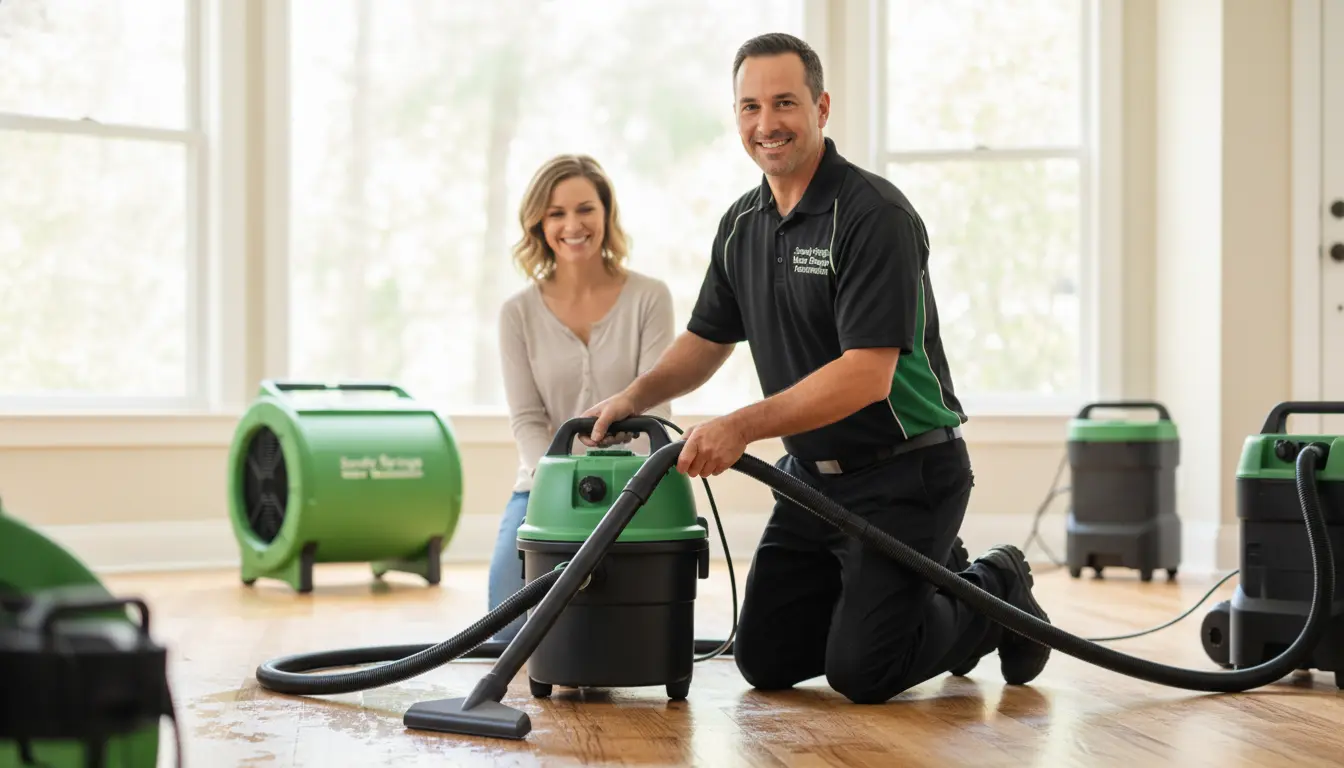
Don’t wait for pros if you can safely start removal. Use towels, mops, or a wet/dry shop vac to suck up standing water. For larger volumes, rent a portable water extractor from a local hardware store like Home Depot on Roswell Road. Avoid using household vacuums, as they can spark or spread contaminants.
In carpeted areas common in Sandy Springs ranch-style homes, pull up rugs to prevent mold underneath. Our water extraction services can handle this professionally if it’s overwhelming.
Advanced DIY Tips for Water Removal
While professionals are ideal, these steps can buy you time:
Remove Water from Hard Surfaces
For tile or hardwood floors, use a squeegee to push water toward drains or out doors. In kitchens, elevate appliances on blocks to protect them. Sandy Springs’ clay soil can exacerbate swelling in wood floors, so act fast.
Handle Soft Contents Carefully
Salvage what you can. For books or papers in a home office, place them between paper towels and weigh them down to dry. If documents are irreplaceable, consider our document recovery experts who use freeze-drying techniques.
Ventilate and Dehumidify
Open windows and doors if weather permits—Sandy Springs’ mild weather often allows this. Use fans to circulate air, pointing them outward to expel moisture. A dehumidifier is your best friend; run it continuously in affected rooms.
For carpets, our carpet water damage repair team recommends lifting and drying underneath to avoid subfloor rot.
When to Call Professionals for Structural Drying
DIY has limits. If water has seeped into walls, ceilings, or insulation, call in experts immediately. Mold can grow in 24 hours, leading to respiratory issues, especially concerning in family homes near Berkeley Lake.
Professionals use industrial-grade equipment for thorough structural drying, ensuring every nook is dry. At Sandy Springs Water Damage Restoration, we arrive within the hour, fully equipped for flood damage cleanup.
Signs You Need Pros
- Water in HVAC systems
- Warped drywall
- Musty odors
- Visible mold spots
Our IICRC-certified technicians follow EPA guidelines, restoring your home safely.
Preventing Future Water Damage in Sandy Springs
Preparation is key in this flood-prone area. Install sump pumps in basements, especially if you’re near the river. Regularly inspect pipes for leaks—older homes in Chastain Park benefit from this.
Consider flood insurance beyond standard policies, as Sandy Springs isn’t in a high-risk FEMA zone but still faces threats. Schedule annual maintenance with local plumbers to catch issues early.
FAQ: Emergency Water Removal in Sandy Springs
How quickly should I act after discovering water damage?
Within the first hour for clean water, immediately for contaminated sources. Delaying can lead to mold and structural issues costing thousands.
Can I dry my home without professional help?
For minor spills, yes—but for anything involving walls or large areas, pros ensure complete drying and prevent hidden damage.
Does homeowners insurance cover water removal in Sandy Springs?
Most policies cover sudden damage like bursts, but not neglect. Contact your agent and keep records; we’ll assist with claims.
How much does emergency water removal cost?
It varies by extent—$500-$3000 typically. We offer free estimates and work with insurers for transparent pricing.
Is mold a concern after water exposure?
Absolutely. In humid Sandy Springs, mold thrives quickly. We include antimicrobial treatments in our services.
Conclusion: Protect Your Sandy Springs Home Today
Water emergencies can strike anyone in Sandy Springs, but with these quick tips—from safety checks to extraction basics—you’re equipped to respond effectively. Remember, while DIY helps, nothing beats professional intervention for lasting results. Don’t let water damage disrupt your life longer than necessary.
Contact Sandy Springs Water Damage Restoration today for expert emergency water removal. We’re your local partners, ready 24/7 to restore your home and serenity. Call now at (470) 288-3957 and let’s get you dry!