Imagine waking up to the sound of dripping water in your Sandy Springs home, only to discover a burst pipe has flooded your basement. In Fulton County, with its humid subtropical climate and proximity to the Chattahoochee River, water damage is a frequent property threat. Whether from heavy seasonal downpours, plumbing failures, or appliance line ruptures, water intrusion can quickly compromise structural integrity.
As local emergency mitigation experts at Sandy Springs Water Damage Restoration, we guide property owners through the complete recovery process. This comprehensive guide details immediate mitigation protocols, structural drying standards, and long-term prevention strategies tailored specifically for Sandy Springs residential and commercial properties.
Understanding Water Damage Risks in Sandy Springs, GA
Sandy Springs experiences unique localized hydrological challenges. Rolling topography, dense commercial development around City Springs and the Perimeter, and intense runoff during Georgia rainy seasons create significant stormwater stress. Low-lying areas and subgrade basements near Roswell Road and River Valley Road frequently face elevated risk during severe weather events.
Primary Causes of Residential Water Damage
Water intrusion in Sandy Springs stems from both environmental and mechanical factors. Flash flooding from swollen local water basins poses recurring external threats. Internally, pressurized plumbing failures, faulty water heaters, and overflowing fixtures remain everyday causes. Older residential properties in historic Sandy Springs neighborhoods often feature aging copper or galvanized piping prone to sudden freeze-thaw ruptures.
Appliance supply line failures—such as washing machine intake hoses or refrigerator ice maker lines—frequently release hundreds of gallons of water unnoticed. Routine inspection and timely replacement of flexible rubber hoses with braided stainless steel can prevent severe losses.
Critical First-Hour Risks and Microbial Growth
Uncontrolled water migration damages structural materials and creates immediate health risks. Standing water initiates microbial growth within 24 to 48 hours. In the high humidity of the Atlanta metro area, unchecked moisture leads to rapid fungal proliferation, impacting indoor air quality and structural stability.
Relative humidity levels exceeding 60% accelerate secondary damage, including drywall degradation, hardwood subfloor cupping, and electrical corrosion. Immediate extraction and psychrometric moisture control are necessary to protect property value.
Standardized Water Damage Restoration Process
Complete structural recovery requires adherence to industry standards set by the IICRC. Our restoration protocol follows five core phases to guarantee thorough structural drying and sanitation.
Step 1: Emergency Inspection and Thermal Mapping
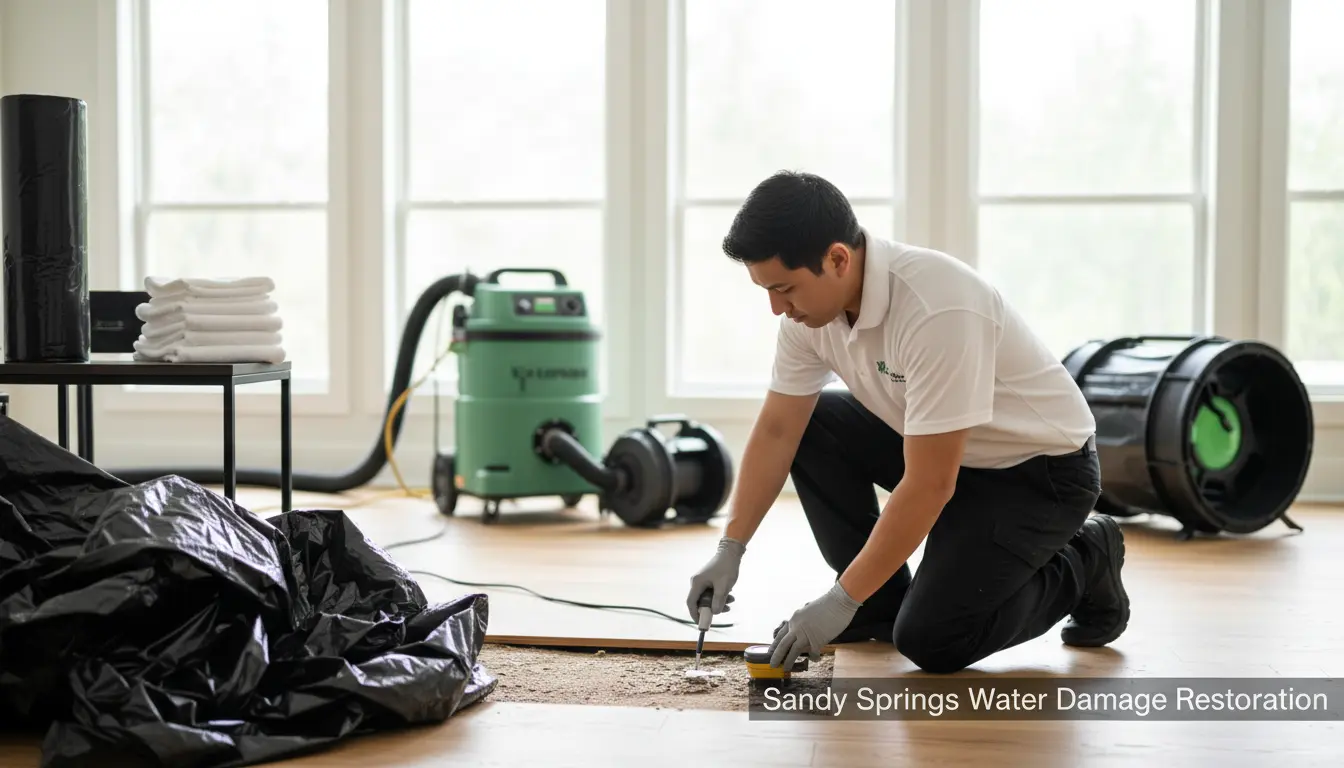
Upon arrival, technicians shut down active water sources and evaluate structural safety. Using infrared thermography and penetrating moisture meters, we map hidden water migration behind wall cavities and beneath flooring without invasive demolition.
Step 2: Rapid Liquid Extraction
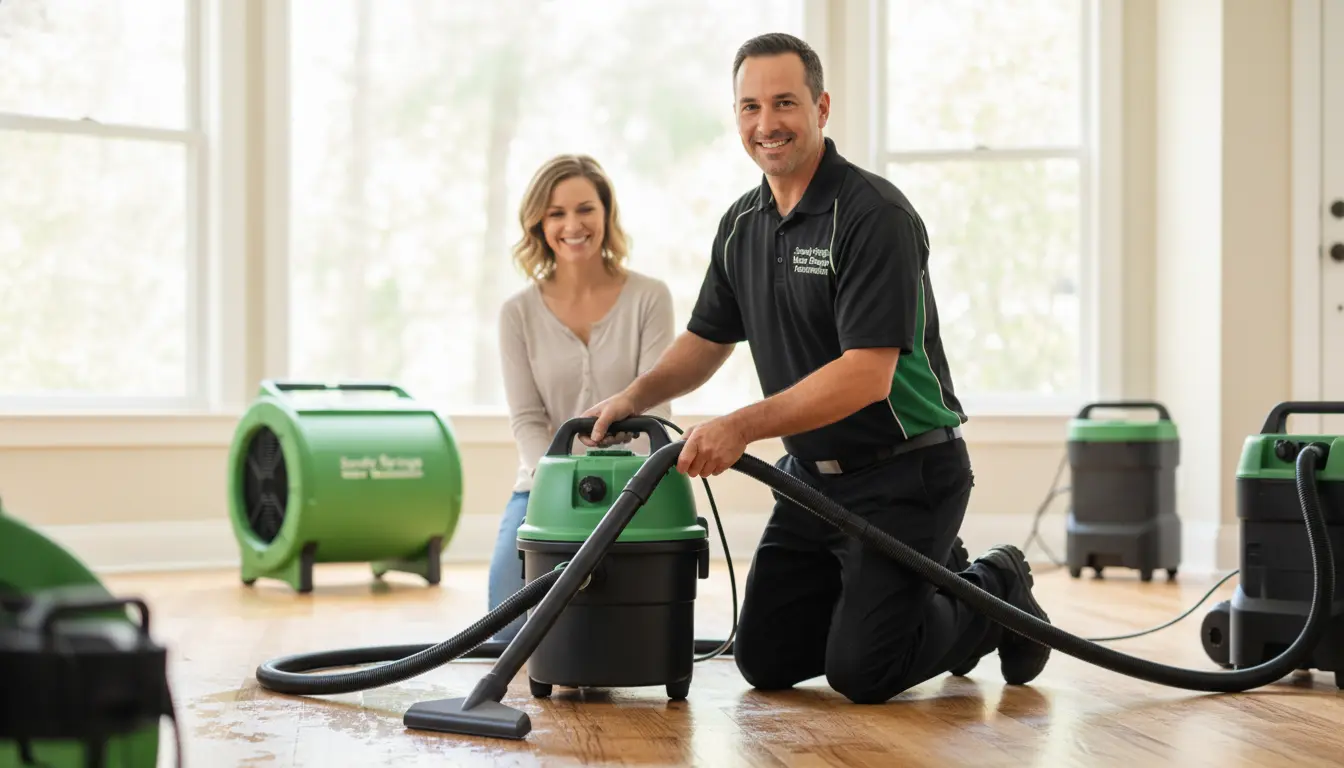
Standing water must be removed immediately using truck-mounted extraction units and submersible pumps. Rapid extraction reduces drying time and prevents deep saturation of foundational concrete pads and timber framing.
Step 3: Industrial Dehumidification and Structural Drying
Following liquid removal, high-velocity air movers and Low Grain Refrigerant (LGR) dehumidifiers are deployed to extract bound moisture from building substrates.
In humid environments, passive ventilation is insufficient. We utilize specialized wall drying and repair systems to force dry, low-vapor-pressure air into wall cavities, preserving structural elements without unnecessary removal.
Step 4: Antimicrobial Treatment and Sanitation
All affected porous and non-porous surfaces are treated with EPA-registered botanical antimicrobials to neutralize bacteria, viruses, and fungal spores. Unsalvageable materials are removed according to containment protocols, while salvageable textiles undergo specialized restorative cleaning.
Step 5: Complete Reconstruction and Claims Coordination
The final phase restores the property to its original condition, including drywall replacement, flooring installation, and structural repairs. We provide comprehensive line-item documentation using Xactimate software and offer direct insurance claim assistance to streamline processing with your carrier.
Proactive Water Prevention Strategies for Sandy Springs Properties
Preventative maintenance significantly lowers structural risk. Homeowners should install automatic battery-backup sump pumps in basements and crawlspaces. Regular clearing of roof gutters and downspout extensions prevents roof overflow from saturating soil adjacent to foundation walls.
Due to local soil expansion in Fulton County, main water lines can experience external pressure shifts. Annual plumbing inspections identify potential line stress early. For emergency service coverage in surrounding North Metro communities, including Dunwoody, Roswell, and Johns Creek, our emergency units maintain continuous operational readiness.
Frequently Asked Questions
How quickly should professional water damage services be contacted?
Professional restoration teams should be contacted within 1 hour of water discovery. Rapid dispatch limits water migration, prevents secondary mold contamination, and significantly reduces total structural repair costs.
Does standard homeowners insurance cover water damage restoration?
Standard policies generally cover sudden, accidental interior water discharge such as burst pipes or appliance overflows. External rising groundwater or flood events require a dedicated NFIP or private flood insurance policy.
Can water damage restoration be completed as a DIY project?
Minor surface spills of clean water can be managed independently. However, major leaks, Category 2 or 3 water events, and structural saturation require commercial extraction, psychrometric drying equipment, and antimicrobial treatment to prevent unseen structural rot and mold.
How many days does the structural drying process typically take?
Professional structural drying typically requires 3 to 5 days. Complex projects involving dense structural timbers, double-layered drywall, or subfloor saturation may require extended drying cycles under continuous moisture monitoring.
Can water-damaged business or personal documents be restored?
Yes. Vital documents, books, and historical photos damaged by clean water can often be saved using specialized vacuum freeze-drying technology if mitigation begins promptly after exposure.
Request Immediate Sandy Springs Restoration Services
When emergency water intrusion threatens your home or business, fast response times prevent extensive structural damage. Contact our local Sandy Springs team for immediate 24/7 extraction and mitigation support.
Call (470) 288-3957 Now