As a certified water damage restoration expert in Sandy Springs, Georgia, I’ve seen firsthand the devastating impact of water intrusion on homes and businesses. A single burst pipe or severe storm can unleash a torrent of water, leaving behind a trail of destruction and secondary damage. In Sandy Springs, where summer storms are common and the humidity is high, it’s crucial to act quickly to mitigate the damage and prevent mold growth.
The key to successful water damage restoration is a swift and professional response. At Sandy Springs Water Damage Restoration, our team of experts is equipped to handle even the most complex cases, from initial moisture assessment to final moisture verification. We use cutting-edge tools like thermal imaging cameras and truck-mounted extraction units to identify and remove standing water, and then employ antimicrobial applications and structural drying techniques to prevent further damage.
But what does the water damage restoration process entail, and how long does it take? The answer depends on various factors, including the extent of the damage, the type of water involved, and the environmental conditions. In this article, we’ll delve into the details of the restoration process, explore the factors that influence the timeline, and provide expert insights on how to navigate the recovery process.
Understanding the Water Damage Restoration Process
The water damage restoration process typically involves several stages, including initial assessment, water extraction, drying, and reconstruction. The first step is to assess the extent of the damage and identify the source of the water intrusion. This involves using specialized equipment like moisture meters and thermal imaging cameras to detect hidden moisture pockets and map out the affected areas.
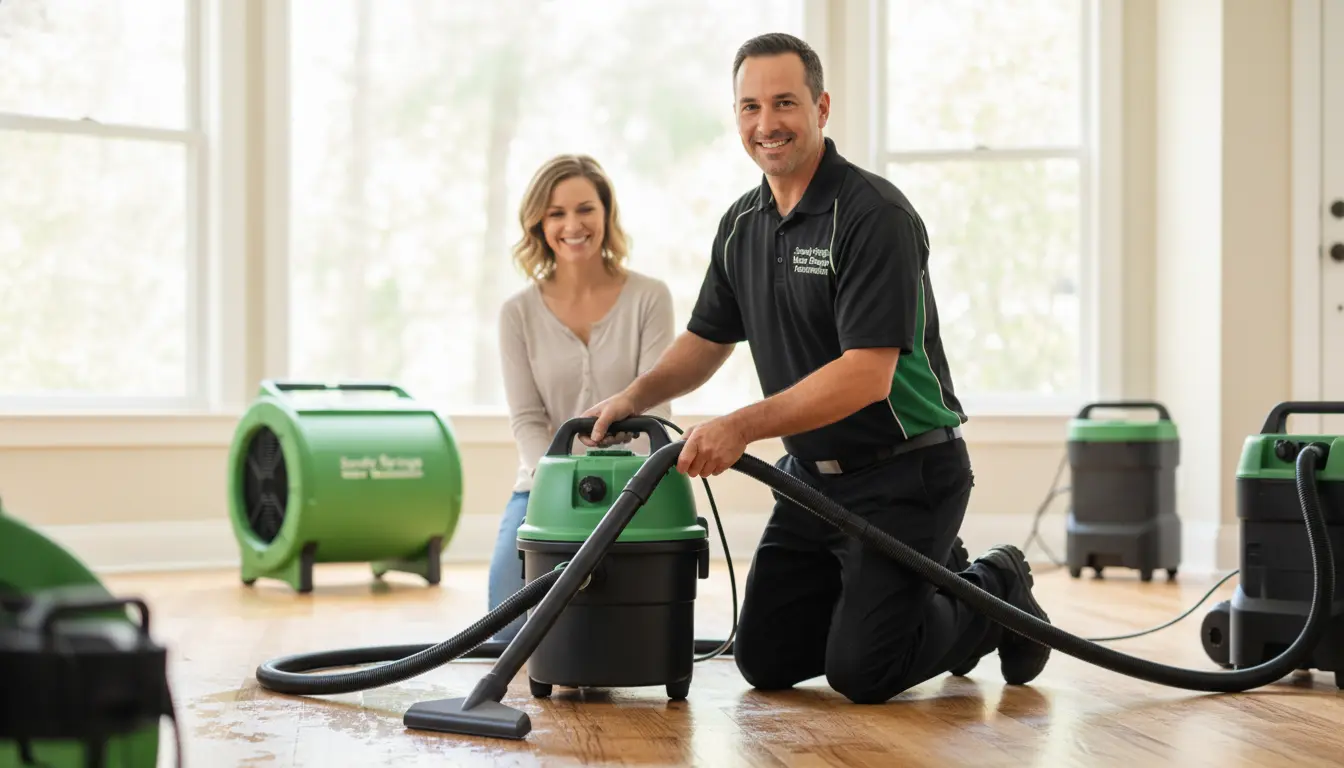
Next, our team will extract the standing water using powerful pumps and vacuum units. This is followed by the application of antimicrobial agents to prevent the growth of mold and bacteria. We then use specialized drying equipment like LGR dehumidifiers and air movers to accelerate the evaporation process and prevent further damage.
The drying process can take anywhere from a few days to several weeks, depending on the extent of the damage and the environmental conditions. In Sandy Springs, where the humidity is high, it’s essential to use desiccant dehumidifiers or LGR dehumidifiers to control the relative humidity and prevent mold growth.
Factors Influencing the Restoration Timeline
The restoration timeline is influenced by various factors, including the type of water involved, the extent of the damage, and the environmental conditions. For example, Category 3 black water, which is contaminated with sewage or other hazardous materials, requires a more extensive and time-consuming restoration process than Category 1 clean water.
The extent of the damage is also a critical factor. If the water intrusion has affected multiple rooms or floors, the restoration process will take longer than if the damage is limited to a single area. Additionally, the environmental conditions, such as temperature and humidity, can impact the drying process and require adjustments to the restoration strategy.
Expert Insights and Tips
As a certified water damage restoration expert, I’ve learned that a swift and professional response is critical to minimizing the damage and preventing secondary damage. Here are some expert tips and insights to help you navigate the restoration process:
First, it’s essential to turn off the utilities and ensure the area is safe before attempting to remove any water or debris. This includes switching off the electricity, gas, and water supply to prevent further damage and minimize the risk of electrical shock or explosion.
Second, it’s crucial to identify and address any hidden moisture pockets behind drywall, under flooring, or in other hard-to-reach areas. This requires specialized equipment like thermal imaging cameras and moisture meters to detect and map out the affected areas.
Third, it’s essential to use the right equipment and techniques to dry the affected areas. This includes employing antimicrobial applications, structural drying techniques, and desiccant dehumidifiers or LGR dehumidifiers to control the relative humidity and prevent mold growth.
Pricing and Cost Factors
The cost of water damage restoration varies widely depending on the extent of the damage, the type of water involved, and the environmental conditions. Here are some factors that influence the cost:
- Water extraction and removal costs, which can range from $1 to $5 per square foot
- Drying and dehumidification costs, which can range from $500 to $5,000 per day
- Reconstruction and repair costs, which can range from $1,000 to $10,000 or more
- Specialized equipment and labor costs, which can range from $500 to $5,000 or more
Safety and Standards
At Sandy Springs Water Damage Restoration, we adhere to the highest safety and standards in the industry. Our team is certified by the Institute of Inspection, Cleaning and Restoration Certification (IICRC) and follows strict safety protocols to prevent exposure to hazardous materials and minimize the risk of injury.
We use EPA-registered antimicrobial agents and follow OSHA guidelines for personal protective equipment (PPE) to ensure a safe working environment. Our team is also trained in the use of specialized equipment like thermal imaging cameras and desiccant dehumidifiers to detect and address hidden moisture pockets and prevent mold growth.
Frequently Asked Questions
What is the average cost of water damage restoration in Sandy Springs?
The average cost of water damage restoration in Sandy Springs varies widely depending on the extent of the damage, the type of water involved, and the environmental conditions. However, the cost can range from $1,000 to $10,000 or more, depending on the factors mentioned above.
How long does the water damage restoration process take?
The water damage restoration process can take anywhere from a few days to several weeks, depending on the extent of the damage and the environmental conditions. In general, the process involves several stages, including initial assessment, water extraction, drying, and reconstruction.
What are the most common causes of water damage in Sandy Springs?
The most common causes of water damage in Sandy Springs include burst pipes, leaky appliances, and severe weather events like storms and floods. Other causes include clogged drains, toilet overflows, and malfunctioning sump pumps.
Can I use a wet/dry vacuum to remove water from my home or business?
While a wet/dry vacuum can be useful for removing small amounts of water, it’s not recommended for large-scale water damage restoration. Professional water extraction equipment like truck-mounted extraction units and submersible pumps are more effective and efficient for removing large amounts of water and preventing further damage.
Conclusion
In conclusion, water damage restoration is a complex and time-consuming process that requires a swift and professional response. At Sandy Springs Water Damage Restoration, our team of experts is equipped to handle even the most complex cases, from initial moisture assessment to final moisture verification. We use cutting-edge tools and techniques to identify and address hidden moisture pockets, prevent mold growth, and restore your property to a safe and structurally sound environment.
If you’re experiencing water damage in Sandy Springs, don’t hesitate to contact us. Our team is available 24/7 to provide emergency water removal, drying, and reconstruction services. We’re committed to providing the highest level of service and ensuring your complete satisfaction. For more information on our services, visit our website at Americansfirstrestoration.Com or contact us directly at Contact Us.
Additionally, you can learn more about our water damage restoration services by visiting our Knowledge Center or reading our blog at Blog. We also provide Water Extraction, Flood Damage Cleanup, and Emergency Water Removal services.